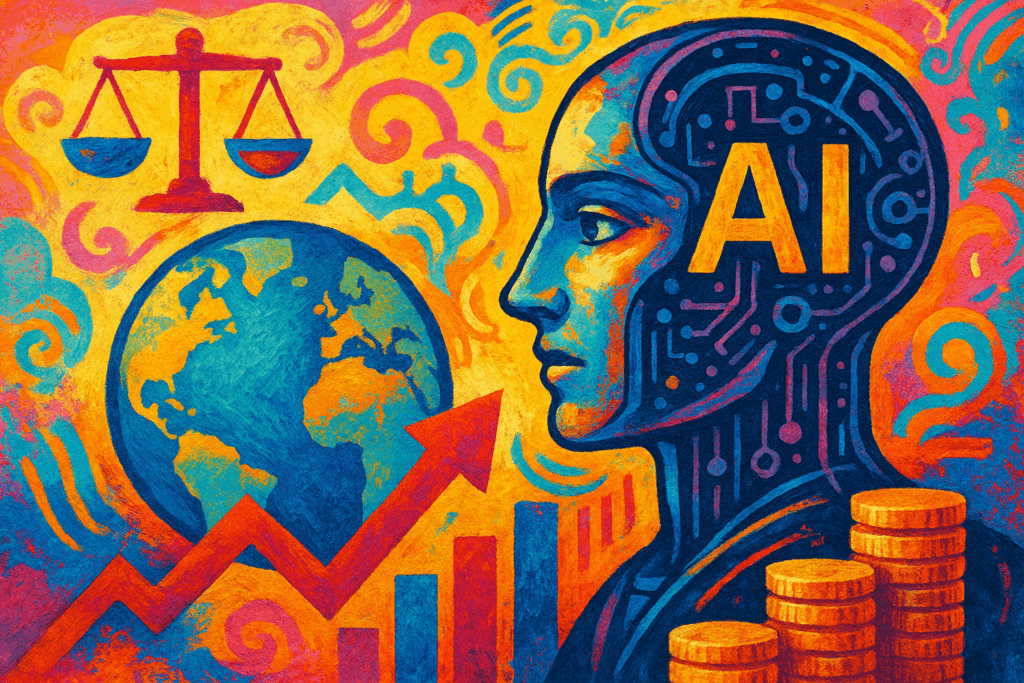

The contest over AI governance is not just legal. It is strategic. The European Union frames AI policy around fundamental rights and market safety while the United States prioritizes technological leadership and commercial competitiveness. These divergent philosophies create overlapping rules with global effects for investors, tech firms, and supply chains.
Divergent Approaches and Global Reach
The EU AI Act centers risk-based rules, transparency, and protection of individual rights. Its scope targets systems placed on the EU market or used within the bloc, giving it extraterritorial reach over providers that seek access to European customers. The United States has moved more incrementally, pairing industry-friendly guidance with export controls and national security tools that restrict access to advanced chips, models, and cloud services. The result is a split: EU law can shape how AI is deployed in markets, while US controls often determine who can build and supply foundational capabilities.
Europe’s Quest for AI Sovereignty
Brussels has launched policies aimed at reducing dependence on non-European infrastructure and suppliers. Initiatives echoing the Chips Act, cloud procurement rules, and funding for native model development aim to localize critical elements of the stack. Policymakers seek resilient European alternatives for semiconductors, cloud, and data governance so that strategic decisions do not rely on external jurisdictions. Progress is underway, but building full-stack independence requires capital, talent, and time.
The Ongoing Geopolitical Stakes
The transatlantic contest combines legal reach with asymmetric control over infrastructure. The US retains strong leverage through control of advanced semiconductors, leading cloud platforms, and key AI labs. The EU has normative power and market leverage that can shape global standards. For investors and executives, the question is whether Europe’s sovereignty agenda can translate into durable autonomy or whether reliance on US-controlled capabilities will limit its strategic options. Outcomes will shape where AI talent, capital, and governance norms converge in the coming decade.