
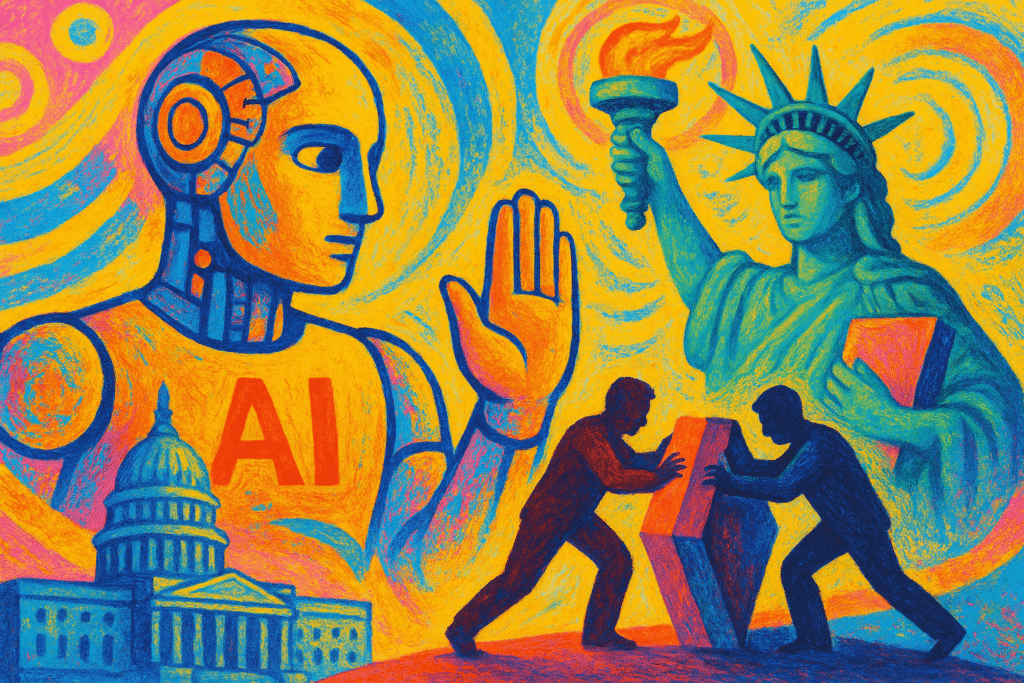
Political Fault Lines: Dismissal vs urgent guardrails
At the center of the impasse are two conflicting public positions. Former President Donald Trump and many Republican allies have minimized the need for sweeping federal rules, with some calling AI alarmism a hoax. Senior Democrats, civil society groups, and several AI leaders warn of near-term safety and security risks and press for immediate guardrails. That split makes bipartisan compromise difficult and turns regulation into a proxy for broader partisan fights.
Legislative Hurdles and competing approaches
Congress faces multiple obstacles: deep partisan polarization, a crowded legislative calendar, and no consensus on what regulation should look like. Proposals range from stronger federal oversight and independent audits to narrow mandates such as a so called kill switch and sector-specific rules. Lawmakers also disagree on jurisdictional authority between agencies and on how to balance innovation with liability and consumer protection. Those differences have prevented a coherent, fast-moving federal response.
Industry debates: control or autonomy?
Within the private sector there is no uniform stance. Some tech firms advocate for voluntary standards and internal safety regimes to retain agility and competitive advantage. Others accept mandatory audits, certification, or transparency requirements to restore public trust. Skeptics argue that extreme risk scenarios are overstated and that heavy regulation could slow product development and investment. The result is fragmented industry positions that make a single legislative solution harder to craft.
The outlook for AI governance
Short term, federal AI law appears unlikely. Expect continued reliance on voluntary frameworks, agency actions, state-level initiatives, and corporate policies. For investors and executives this means a more uncertain regulatory horizon, uneven compliance costs, and potential market fragmentation. Strategic responses should include scenario planning for varied regulatory outcomes, clearer public reporting on safety practices, and attention to state and international rulemaking that may outpace Washington.
In the absence of a clear federal playbook, governance will be shaped by patchwork rules, market pressures, and high-profile incidents that could trigger sharper intervention later.