
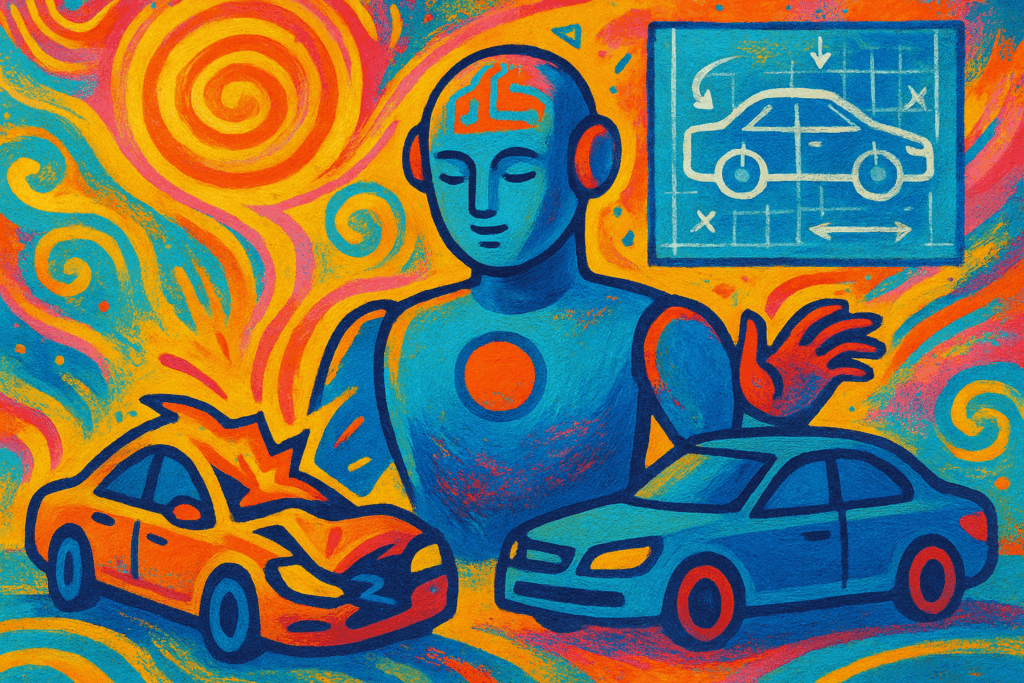
AI’s Blueprint: Orchestrating the Future of Auto Claims
Introduction
Auto claims have grown more complex as vehicles adopt advanced driver assistance systems and electric powertrains. Fragmented workflows and scarce skilled labor lengthen cycle times and raise costs. Artificial intelligence offers a platform-level approach that manages data, partners, and processes across the full claims lifecycle to restore speed and accuracy.
AI-Powered Claims Orchestration: A Holistic Approach
Orchestration moves beyond isolated pilots to connect intake data, predictive models, repair networks, and payment systems into a single, adaptive supply chain. At first notice of loss (FNOL) AI can triage severity, estimate repairability versus total loss, and flag high-risk claims for fraud scoring. Computer vision and automated estimating speed damage assessment and parts matching, while optimization engines route work to the best-fit repairer based on skillset, location, and capacity.
That integration shortens cycle times, reduces decision leakage, and raises estimate accuracy. By treating claims as a coordinated ecosystem rather than a set of silos, carriers can align KPIs across vendors, automate exception workflows, and deliver more consistent outcomes for customers and balance sheets.
Addressing the Talent Gap with Intelligent Automation
The industry faces a shortage of claims professionals and technicians trained for EVs and ADAS repairs. AI amplifies existing experts by automating routine tasks, offering step-by-step repair guidance, and surfacing the right knowledge at the right time. Augmented decision tools allow less experienced adjusters to follow validated pathways while senior staff handle complex judgment calls.
Automation also reduces manual backlogs, lets specialists focus on high-value work, and makes roles more attractive to new hires who expect modern digital tools. In short, AI preserves institutional know-how and scales human expertise across the claim volume curve.
Conclusion: The Strategic Imperative for Insurers
Adopting AI orchestration is a strategic move for carriers that want faster, more accurate claims outcomes and better customer experiences. When AI is deployed alongside human expertise it becomes the platform for sustainable operational gains, lower loss costs, and competitive differentiation in auto insurance.