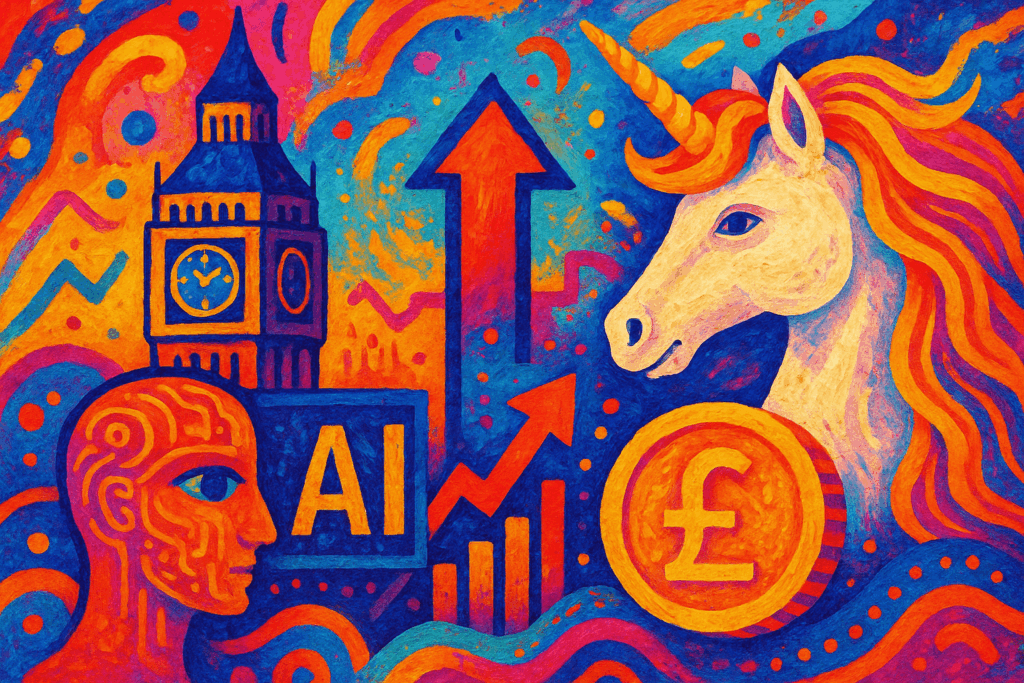

The AI Revolution in Fintech
AI is rewriting rules across financial services, shifting competitive advantage to firms that operationalize models at scale. For executives and investors this means faster underwriting, lower operating costs, and richer client relationships powered by continuous data signals.
Reshaping Financial Services Operations
Smarter Personalization & Efficiency
Modern models enable real-time personalization across channels: tailored investment guidance, dynamic loan pricing, and conversational agents that resolve routine requests. Automation of manual workflows such as KYC, reconciliation, and settlement reduces processing time and error rates, allowing teams to focus on higher-value decisions.
Bolstering Security & Risk Management
AI strengthens fraud detection with unsupervised and supervised models that surface subtle anomalies across transaction streams. Machine learning improves credit assessment by incorporating alternative data sources, broadening access while managing loss. Natural language processing accelerates compliance reviews by flagging contract clauses and regulatory changes for rapid action.
Key Trends Driving AI Fintech Forward
Generative AI is streamlining client reporting, personalization at scale, and code synthesis for rapid product iteration. Predictive analytics enhances liquidity forecasting and stress testing. Federated learning and privacy-preserving methods let institutions train models without centralizing sensitive data. Algorithmic trading continues to push latency-optimized models for microsecond advantages.
Strategic Outlook for the AI Fintech Era
Near term, prioritize use cases with measurable ROI such as fraud reduction and automated underwriting. Medium term, invest in modular data platforms, model governance, and reproducible validation to capture scale benefits. For investors, target companies with defensible data moats, transparent model validation, and leadership aligned on AI risk controls. The firms that pair domain expertise with disciplined deployment and strong controls will define the next phase of value creation in finance.